Consejo de Comunicación y Ciudadanía
Encuentro con Gobiernos Regionales
y Consejos de la Costa Caribe Norte y Sur en el Proceso de Consulta de las Reformas Constitucionales
Jueves 6 de agosto de 2026
Palabras del Comandante Lumberto Campbell, Coordinador de la Secretaría para Asuntos de la Costa Caribe:
Buenas tardes, queridas Compañeras, Compañeros, querido Doctor Gustavo Porras, Hermano, Compañero de la Junta Directiva de la Asamblea Nacional, Miembros de la Comisión Constitucional, Compañeros todos.
Hoy estamos reunidos con los Consejos Regionales de la Costa Caribe Norte y Sur. Cuando el 19 de Julio el Comandante instruyó que instalásemos un dique para evitar el retroceso de lo que venimos haciendo en Nicaragua, en mi mente eso tuvo un sentido mayúsculo, porque hablar de retroceso en el caso de la Costa Caribe es hablar de exclusión. Antes, los costeños ni existían legalmente; no estábamos en la Constitución de la República de Nicaragua y, en estos 19 años, lo que hemos ido experimentando en la Costa Caribe nicaragüense es una transformación de la oscuridad a la luz: 19 años de ir alcanzando logros, producto de la Estabilidad, la Seguridad y la Paz.
Nosotros, en la Costa Caribe nicaragüense, en estos 19 años hemos visto lo que en 200 años de historia de este país no se había logrado. Cuando triunfó la Revolución en la Costa Atlántica, el analfabetismo era casi del 90%, la infraestructura era casi inexistente, entonces sí, ponerle un dique y asegurar que la ruta del desarrollo que estamos avanzando en Nicaragua se mantenga y se proyecte hacia el futuro es determinante.
Entonces, por eso todos los Compañeros de nuestros Consejos Regionales están atentos a escuchar, de parte de la Asamblea Nacional, de parte del Doctor, Presidente de la Junta Directiva, las nuevas directrices para garantizar ese mandato que nuestro Comandante dejó claro el 19 de julio.
Entonces, Doctor, están los Compañeros listos para entender, comprender y participar en esta Reforma a la Constitución.
Palabras del Doctor Gustavo Porras:
Gracias, Comandante Campbell.
A todos los Compañeros de los Gobiernos Regionales y de los Consejos Regionales, les quiero presentar a los Miembros de la Comisión Especial Constitucional, son los Compañeros de la Junta Directiva, los Jefes de Bancada y dos Presidentes de comisiones.
Tenemos a la compañera Arling Alonso, que está aquí presente con nosotros y que es la Primer Vicepresidenta; a nuestra Heroína Amadita Pineda, que es la Segunda Vicepresidenta; y a la amiga Presidenta del PLC, María Haydee Osuna, que es la Tercer Vicepresidenta.
Por estos lados tenemos a la Compañera Loria Raquel Dixon Brautigam, caribeña, y es la Primer Secretaria de la Asamblea; tenemos al Doctor Wilfredo Navarro, que es el Segundo Secretario, y aquí al amigo Alejandro Mejía Ferretti, que es el Tercer Secretario, él es del ALN.
Por este lado, tenemos a los Jefes de Bancada. Al Doctor Edwin Castro, que es el Jefe de la Bancada del Frente Sandinista; tenemos al Compañero, al amigo Lester Flores, que es el Jefe de la Bancada del PLC; y al amigo Mario Asensio, Jefe de la Bancada BID. Por aquí tenemos a la Presidenta de la Comisión de Justicia, que es la Doctora María Auxiliadora Martínez, y al Presidente de la Comisión Económica, el Doctor Wálmaro Gutiérrez.
Les damos la bienvenida a todos y le damos la bienvenida, en especial, a nuestro Jefe de la Costa Caribe, el Comandante Campbell, que también es Miembro del Consejo Supremo Electoral. Tenemos a los Diputados Miembros de la Comisión de Pueblos Indígenas y Afro-descendientes, pero son Pueblos Originarios. Es que algunos toman la palabra indígena de forma peyorativa y “indígena” significa nacido dentro, nacido aquí, originario de Nicaragua.
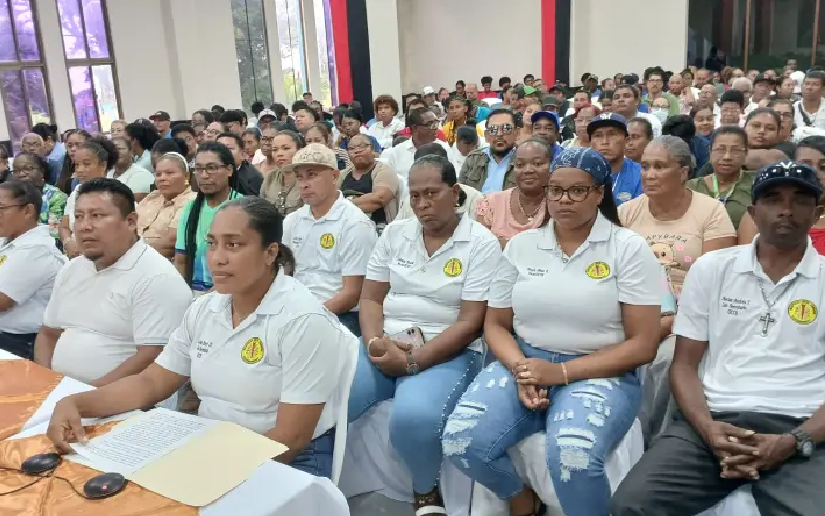
Bienvenidos los Hermanos de la Secretaría de la Costa Caribe aquí presentes y a todos los que están conectados, me dicen que hay 220 Hermanos.
Entonces, vamos a comenzar y lo primero que vamos a presentarles a ustedes son las seis ideas centrales, que al principio yo les llamaba conceptos y, poco a poco, ya me dijeron: “Son ideas”. Dijo la Doctora Arling: “Es mejor ideas”. Son seis ideas centrales que todos nosotros hemos venido discutiendo. Pero lo importante es saber por qué vamos a tomar esas seis decisiones, por qué estamos proponiendo.
En primer lugar, porque tenemos un mandato. El Comandante Campbell nos dijo claramente, el Comandante Ortega, la Presidencia de la República, el Copresidente Comandante Daniel y la Copresidenta Compañera Rosario nos orientaron claramente que la Asamblea trabajara para garantizar que en este país no vuelvan a haber elecciones, no vuelvan a haber elecciones donde los que están agazapados, donde los enemigos busquen meterse, agarrar el Gobierno y agarrar el poder para echar para atrás todos los derechos del Pueblo.
Esas son las elecciones que nosotros tenemos que garantizar que no vuelvan a suceder en nuestro país. Van a haber elecciones, las que los nicaragüenses queremos, las elecciones que se hagan en Paz, con Tranquilidad y que nos permitan cumplir con el objetivo central. ¿Y cuál es el objetivo central que tenemos los nicaragüenses? Derrotar la pobreza, ese es el objetivo central. Y, para derrotar la pobreza, nosotros necesitamos garantizar Estabilidad, Seguridad y Paz, ese es el objetivo central y ese es el camino que tenemos.
Entonces, cuando nosotros vemos esto, tenemos que saber de dónde venimos. Cuando hagamos todo, tenemos que saber de dónde venimos y, para nosotros, es fácil saberlo ya, porque lo aprendimos. El primer ataque que tuvimos para dominarnos, fue el colonialismo de una potencia extranjera, por un lado, en el Pacífico nuestro, el colonialismo español, y en el Caribe, el colonialismo inglés.
Eso fue así, pero lo que tuvo más fuerza, porque ellos se pusieron de acuerdo después de tener sus guerritas, es que nos dejaron en manos del colonialismo español a toda Centroamérica. Entonces, de ahí pasaron 300 años de lucha para llegar a 1821, cuando se dio la Independencia de Centroamérica, que es la independencia del colonialismo español.
Por así decirlo, era una independencia en un momento, porque todavía apareció una forma diferente de dominación: el neocolonialismo. En ese momento venía apareciendo una nueva forma de organizar la dominación y fue apareciendo el imperialismo, el expansionismo yanqui y el filibusterismo y llegamos así a 1846. Conocemos 1821, que fue el 15 de septiembre, la Independencia, y también en septiembre celebramos nuestras Fiestas Patrias por el 14 de Septiembre de 1856, que fue la batalla de San Jacinto.
¿Por qué? Porque dos años antes, en 1854 y 1855, aparecieron aquí los filibusteros, apareció William Walker y se erigió como Presidente de Nicaragua y decretó la esclavitud en este país. Los nicaragüenses reaccionamos y los centroamericanos reaccionaron junto con los nicaragüenses, hasta que derrotamos a William Walker.
Pero esa es nuestra historia, eso es lo que hemos vivido hasta llegar a 1923. Antes de 1923 estaban sucediendo muchas cosas y, en un documento que les vamos a dar, hay una serie de fechas. Han pasado muchas cosas, para poder saber qué era lo que estaba pasando en cada caso, ahí tienen el dato en el documento.
La Revolución Liberal, a finales de los años de 1893 se dio la Revolución Liberal, la que encabezó José Santos Zelaya, que además fue muy importante porque realmente trastocó lo que en ese momento era la estructura de políticas económicas y sociales del país. Por eso podemos decir que ese fue un paso importante y que Zelaya es considerado un Héroe Nacional.
Posteriormente, cuando los yanquis venían pensando en garantizar su hegemonía y también la forma de trasladarse de un mar a otro, trasladarse del Caribe o del Atlántico hacia el Pacífico, o trasladarse del Este al Oeste, todo eso era lo que venían pensando para garantizar su expansionismo.
Por eso apareció William Walker en Nicaragua, porque ya lo estaban pensando y porque ya había gente interesada en desarrollar ese tránsito, como Cornelius Vanderbilt, que fue uno de los financiadores del filibusterismo en Nicaragua. Desde aquí ellos ya estaban determinando lo que había que hacer en este país. Aquí está Rubén Darío, la Revolución Liberal, José Santos Zelaya y, después, en 1907, aparece Benjamín Zeledón.
Pero, antes de esto, internacionalmente había sucedido que los yanquis habían impulsado la separación de Panamá de Colombia; es decir, ellos dividieron y crearon Panamá para facilitar su canal. Además, en Colombia, en ese tiempo estaban las transnacionales norteamericanas y había revueltas y verdaderas masacres. Los yanquis, para calmar el asunto, hicieron el tratado Bárcenas Meneses-Esguerra, mediante el cual nos quitaron a nosotros San Andrés y se lo entregaron a los colombianos.
Ellos continuaron avanzando y, en 1909, cuando el General Zelaya comenzó a buscar cómo hacer el canal por Nicaragua con la participación de otros países y otras potencias, entonces surgió la nota Knox. Para quitar a Zelaya, le pusieron unas cañoneras, le mandaron una nota del Departamento de Estado y Zelaya renunció y se fue. Vino la intervención yanqui de 1912, donde aparece la lucha del General Benjamín Zeledón.
Después de la lucha de Zeledón, ya saben ustedes, vienen todas las luchas contra la intervención; viene la lucha libero-conservadora y llegamos a Sandino. Esa es la historia que ya sabemos, porque el propio Sandino nos la cuenta en sus escritos, cuando vio cómo arrastraban a Zeledón y, en vez de atemorizarlo, le dio la convicción de luchar contra la intervención yanqui y estamos hablando de 1912.
Así llegamos a 1923. Ahí estamos con una Nicaragua intervenida, con una presidencia de Adolfo Díaz, aquí se aprueba una ley electoral conocida como la Ley Dodds, que era el pensamiento del Departamento de Estado norteamericano, del Departamento de Estado yanqui, para buscar cómo hacer una ley electoral que desarrollara un modelo como el que ellos tenían, el bipartidismo.
Entonces, mandan a Dodds para que él desarrolle esta ley, contratado por el Gobierno de Adolfo Díaz. Él desarrolla una ley en la que se habla de organizar una Democracia, entre comillas, bipartidista y esa es la Ley Dodds.
Esta es una boleta de las elecciones de 1932, donde está como candidato por los conservadores el propio Adolfo Díaz y como candidato por los liberales Juan Bautista Sacasa. Como les decía en la mañana a unos compañeros: “A los dos y con miedo”. El que trajo la intervención y el otro fue el de la última cena de nuestro General Sandino, para que lo asesinaran. Esa era la realidad de este país.
Después de que esta ley quedó promulgada, sucede que en 1925 hay un golpe de Estado conocido como “El Lomazo”, de Emiliano Chamorro, conservador, contra los liberales Carlos Solórzano y Juan Bautista Sacasa. Después, Juan Bautista Sacasa se va a México, busca ayuda y comienza la guerra libero-conservadora, la guerra de 1926-1927, la guerra liberal contra Emiliano Chamorro, o la llamada guerra constitucionalista.
En 1926, Adolfo Díaz asumió la Presidencia ante la renuncia de Chamorro. Chamorro renuncia porque hay una orden de los yanquis. Esa es
la nota Kellogg enviada por el secretario de Estado el 15 de enero de 1926, mediante la cual se desconocía el Gobierno de Emiliano Chamorro. Entonces, todo venía siendo determinado, decidido e impulsado por el Gobierno yanqui. Esa era nuestra Nicaragua.
En 1926 Chamorro también sale porque los yanquis intervinieron y desembarcaron en Puerto Cabezas cinco mil marines y dieciséis buques de guerra, todos bajo el mando del almirante Julián Lane Latimer, el 24 de diciembre de 1926.
El 4 de mayo de 1927 se firma el Pacto del Espino Negro entre Moncada y Stimson, y es donde viene ese 4 de mayo que nosotros conmemoramos como nuestro Día de la Dignidad Nacional, porque viene Sandino, no acepta el pacto y se va con 30 hombres a luchar, y lanza, el primero de julio, su primer manifiesto en el Mineral de San Albino.
¿A la par qué está sucediendo? Está sucediendo que nos quitaron, como les decía, nos quitaban la isla de San Andrés en 1928. Es decir, los yanquis están manejando Nicaragua, están manejando Centroamérica y están aprovechándose de eso para comenzar a despedazarnos. Entonces, como tienen el alboroto en Colombia, le dan San Andrés y Providencia a Colombia para calmarlo. Andan buscando lo que hacen ahorita, lo que quisieron hacer ayer, antier, en la OEA. Ellos reúnen a la gente y comienzan a negociar para poder condenarnos.
Así llegamos a enero de 1928, llegan los marines norteamericanos y es lógico, todas estas son acciones donde el imperialismo siempre actúa de esa forma, son sus recetas, son acciones que andan buscando ganancias en todos lados. Vienen aquí, traen marinos, y los marinos son los que van a asumir toda la estructura electoral; se hacen dueños de los cantones, pero también están teniendo una cantidad de marinos en una intervención en Nicaragua. Frente a cualquier alboroto y vienen a despedazarnos con las Islas San Andrés.
Si uno mira plasmado lo que va sucediendo en cada uno de los momentos, hay un plan clarísimo que ellos vienen desarrollando. Entonces, en 1928, como los yanquis asumieron un compromiso con Moncada en el pacto del Espino Negro, y le dijeron a Moncada que iban a garantizar su presidencia, garantizarla, la única forma era que ellos la llevaran a cabo, y eso fue lo que hicieron. En 1928 llegaron los marines, controlaron los cantones electorales.
Entre otras cosas, nombraron como Presidente del Consejo Nacional de Elecciones al brigadier General Frank Ross McCoy. Ese era el Presidente del Consejo Supremo Electoral, para decirlo en los términos de ahora. ¿Para qué? Para cumplir el objetivo de que Moncada fuera el Presidente del país.
Esta que está aquí es la ley Dodds de 1923, porque nosotros decimos que a todos los Compañeros que nos miran tenemos que darles una prueba de que lo que estamos hablando es cierto, y eso lo encontramos aquí, en las recopilaciones. Esta es la ley de 1923, la ley Dodds, es una evidencia.
Y, para que miren el nivel de esa Democracia, supongamos que fueran los porcentajes de hoy. No sé si eran los mismos, pero no tiene por qué haber mucha variación: De cada 100 nicaragüenses, 48 son varones y 52 son mujeres. En ese tiempo, hasta la Revolución, los menores de 20 años representaban más del 60%. Los nicaragüenses con menos de 20 años éramos más del 60%. Es decir, éramos la enorme mayoría.
Ahora imagínense, en 1930 el analfabetismo era enorme y, realmente, los casamientos por la iglesia eran ínfimos. Todo esto lo digo para que miren cuál era la población votante. El padrón electoral de ese tiempo establecía que el derecho al sufragio pertenecía solamente a los varones nicaragüenses. Es decir, de cada cien, cuarenta y ocho. ¿Cuáles varones? Los mayores de 21 años. Ya eso nos lleva a que, de cada cien, veinte. Si alguien de 18 quiere votar, puede votar, si sabe leer y escribir.
Es decir, eran cinco, tal vez o era para que votaran los que sabían leer y escribir, que eran los hijos de los patrones que tenían menos de 18 años. Ese era el diseño. Y, además, si son casados, para ser casados por la Iglesia, tenían que tener derecho a pertenecer a la Iglesia. Es decir, entonces, cuando se veía la realidad, es que de cada 100 nicaragüenses el derecho a votar estaba, digamos, restringido para un 15 o 18% de los nicaragüenses.
Pero, de ese 18%, probablemente eran tres, de los de saco de ese tiempo, y los demás eran los peones de su finca. Esa era la verdad e iban a votar por donde él les dijera. Entonces, ese es el diseño de Democracia que nos enseñaron, que nos querían imponer, que querían que nosotros siguiéramos. Ese es el diseño de Democracia.
Esta era la ley Dodds y la ley sí tenía la parte organizativa, los distritos electorales y los cantones. Entonces, ¿qué hicieron los yanquis y los vende patrias? Dijeron: “Vamos a ocupar toda la parte estructural de la ley Dodds: “Cómo organizar, pero la vamos a dejar en suspenso”. Y la dejaron en suspenso con un decreto que se llama la ley McCoy. Hay otras partes en este documento que son mucho más impactantes. Aquella parte que dice: que el suplente del Presidente solo puede ser un yanqui nombrado por el Presidente de los Estados Unidos.
Y una parte importante, Comandante, de la Democracia de ellos: El yanqui era el Presidente del Consejo Supremo, con dos nicaragüenses, formaban tres. Bastaba la mayoría para poder sesionar; es decir, con dos. Y, si en estos dos hay empate, el Presidente, que es el yanqui, tiene doble voto. Pero, además, dice en una parte del decreto que: si no llegaran los otros dos, el Presidente puede llevar adelante la reunión. El manoseo era terrible, esa es la visión imperial en esto.
Entonces, miren lo que dice:
En vista de que la Corte Suprema de Justicia, por acuerdo del 17 del corriente mes, ha nombrado, en sustitución de don Joaquín Gómez, que puso su renuncia, al Señor General Frank Ross McCoy, Presidente del Consejo Nacional de Elecciones.
Y aquí viene lo importante… Es decir, no lo nombró porque quiso:
Y que este alto funcionario, en ese carácter y por haber sido designado por el señor Presidente de los Estados Unidos, debe dirigir el acto electoral de mil novecientos veintiocho de autoridades supremas, conforme a lo convenido para poner término a la guerra civil que asolaba Nicaragua.
Entonces, aquí vamos a hacer elecciones, pero el Presidente es el que nombró al Presidente yanqui. ¿Para qué? Para que garantice lo acordado, que Moncada sea el Presidente. Suspendieron la ley del 23. Dice que va a utilizar todos los mecanismos organizativos, a excepción de esto que están determinando, y que, cuando se haya cumplido lo convenido, va a regresar la otra ley nuevamente a sus funciones.
Toda esa lucha de nosotros, los nicaragüenses, esa lucha histórica permanente y todo, no llegó hasta el 2025. Claro que esa lucha pasa después de la traición y el asesinato a Sandino. Viene la lucha de los sandinistas. Viene el eslabón histórico de Santos López. Viene la fundación del Frente. Viene la lucha del Frente desde el 61. Pasa hasta identificar que lo que tenía enfrente no era simplemente Somoza; era la expresión de los marines gobernando Nicaragua y que había que derrotarlos.
Se llegó al 1979, se derrotó, se sacó al último marine y, como era natural, la guerra continuó porque no podían aceptar que eso quedara así. Vino todo el fenómeno que ya conocemos nosotros, de las luchas de los años 80. Pasamos por el 84, que fue la primera muestra de elecciones en medio de un modelo transparente. Pero estábamos en guerra y fueron elecciones frente a los yanquis, y lo mismo ocurrió en el 90.
Es decir, para salir de la guerra pasamos por todas las elecciones. El Pueblo de Nicaragua es muy inteligente y entendió el planteamiento yanqui, por eso es que decimos que no fueron elecciones realmente libres. Sí, fueron elecciones transparentes, bien organizadas, pero libres no, porque los yanquis dijeron: “Si vos votás por los sandinistas, continúa la guerra”. Y la gente es inteligente, los nicaragüenses somos inteligentes. Sabemos cuándo tenemos que hacer un golpe, entonces se dio el resultado con una pistola en la cabeza.
Pero también nosotros, el Frente, el Comandante Daniel, la Compañera Rosario y todos nuestros Compañeros somos parte del Pueblo. Con la misma inteligencia dijimos: “Hay que aceptar la decisión del Pueblo nicaragüense; por algo nos lo está diciendo”. Y recuerdo como si fuera hoy. El Comandante dio dos orientaciones, así como nos está dando estas hoy.
La primera es: “Vamos a regresar al Gobierno por la vida y los votos”. Y así fue como lo hicimos. Y la segunda fue: “Bueno, hay que resistir, vamos a gobernar desde abajo, porque no nos van a imponer el neoliberalismo fácilmente”.
Así lo hicimos y con esa convicción estamos ahora, que los yanquis siguen y eso ha dado lugar a los intentos de golpe. Pero nosotros tenemos que demostrarle a quién es nuestro Presidente. ¿Quién es nuestro Presidente? El Pueblo, el Pueblo Presidente es nuestro Jefe y tenemos que demostrarle a este Jefe, cuando nuestro Comandante, Jefe del Frente Sandinista y Copresidente de esta República, dice: “Hay que demostrarle al Pueblo Presidente. Nosotros tenemos que demostrarle que estamos aquí para mejorar”.
Eso significa demostrarle que estamos cons-truyendo hospitales, carreteras, cobertura eléctrica, construyendo escuelas, gratuidad en la salud y gratuidad en la educación. Todo lo que ya sabemos, porque el Pueblo es Presidente y todo eso es para el Pueblo. Eso es lo que defendemos. Eso es lo que vamos construyendo para derrotar la pobreza.
Así llegamos al año pasado. Ahí estuvimos trabajando el Comandante Campbell y otros Compañeros, y llegamos al año pasado. Este es el Artículo 1 de nuestra Constitución actual. Este Artículo lo debemos aprender de memoria, porque además nos guía y dice:
La Independencia, la Soberanía, la Auto-determinación Nacional, la Seguridad y la Paz son derechos irrenunciables del Pueblo y fundamentos de la nación nicaragüense. Toda injerencia extranjera en los asuntos internos de Nicaragua o cualquier intento de menoscabar esos derechos, atenta contra la vida del Pueblo. Es deber de todos los y las nicaragüenses preservar y defender estos derechos.
Por consiguiente, todos aquellos o aquellas que atenten contra esos sagrados derechos del Pueblo nicaragüense serán considerados traidores a la Patria.
Es el Artículo uno, es la guía. Cada vez que hablemos de violación de la Constitución, debemos referirnos a todos sus Principios Fundamentales. Hay doce Principios Fundamentales, si mal no recuerdo, pero este es el primero.
Con esto, más el mandato del Comandante Daniel, más la claridad de cuál es el objetivo central, pasamos a elaborar las ideas para la Reforma. Las ideas para la Reforma, con el ánimo de que no nos olvidemos, son seis. Pudiera ser que sean seis artículos sustantivos, pero nosotros las llamamos ideas para la Reforma, para que no se olviden.
1. No podrán
2. Estabilidad
3. Cohesión y Seguridad
4. La Garantía de la Democracia Electoral, que se refiere a las atribuciones del Consejo Supremo Electoral.
5. PAX, que es el poema de Darío.
6. Coherencia
Esos son los seis elementos que vamos a mencionar aquí.
“No podrán”. Esa fue la orden que nos dio el Comandante Daniel: “No podrán, no podrán, no podrán”. Eso nos dijo.
“Las y los ciudadanos tienen derecho a elegir y ser electos y a optar a cargos públicos, salvo las limitaciones contempladas en la Constitución Política”. Es el Artículo cuarenta y siete, tal y como está. Pero nosotros, en la elaboración de las ideas que tenemos, que estamos desarrollando y que sometemos a todos ustedes, proponemos lo siguiente:
No podrán ser candidatos a cargos de elección popular ni podrán ejercer cargos públicos por designación de la Presidencia de la República o elección de la Asamblea Nacional quienes incurran o hayan incurrido en actos que menoscaben la Independencia, la Soberanía, la Autodeterminación Nacional, la Seguridad y la Paz. Los golpistas, los traidores a la Patria y quienes violenten o hayan violentado los Principios Fundamentales de la Constitución Política.
Esos no podrán, esa es la primera idea. Ahora, ¿qué significa eso? Bueno, que no podrán hacerlo todos los que hayan incurrido en actos que menoscaben estos principios, todo lo que dice el Artículo uno. Pero eso, en concreto, ¿qué significa? Todas aquellas personas que agarren una red, un TikTok, o hablen e insistan o promuevan la injerencia extranjera, pidan intervención militar, se organicen con financiamiento proveniente del extranjero, propongan gestiones o respalden bloqueos económicos, comerciales o financieros, y propongan o respalden sanciones contra el Estado de Nicaragua, sus Instituciones y sus ciudadanos. Es decir, para que quede más clarito, más aterrizado, a qué se refiere esto.
Después, el segundo punto, que les decía, es la “Estabilidad”. La Estabilidad es de siete años. Es decir, un período entre elección y elección y un período para los cargos de elección popular y de nombramiento que sea estable, que nos dé el tiempo suficiente para valorar el camino que llevamos y ver los
proyectos que ya van más allá del mediano plazo y vamos viendo cómo van evolucionando.
Estamos convencidos. ¿Por qué? Porque, si la lucha es contra la pobreza, lo que se debe mostrar es que en cada período avanzamos contra la pobreza y, para poder valorarlo, se necesita un período más o menos estable. ¿Es este un período extraño en el mundo? No. Italia tiene siete años, Irlanda tiene siete años y, en África, casi todos los países tienen siete años. Hay países que tienen diez, China tiene diez años de período.
Hay algunos que vienen avanzando hasta seis años. Recientemente, en Centroamérica hubo cambios. Hay países con períodos de cinco años y otros con períodos de cuatro. Es decir, imagínense la inestabilidad que habría si existieran períodos de dos años. Eso no puede ser… o de tres años.
El de cuatro, a lo mejor cuando tenés modelos donde el que manda es el mismo y el que pone al Presidente es otro, por eso son períodos de cuatro años. Pero aquí la verdad, lo que queremos y lo que nos guía es la lucha contra la pobreza: Siete años. Ahora, siete años para los cargos de elección popular y siete años para los que designa el Presidente o elige la Asamblea.
Para poder tener “Cohesión y Seguridad”, también siete años para el Comandante en Jefe de las Fuerzas Militares y para los Jefes de las Fuerzas Policiales. O sea, que al hacer la Reforma se reforman de mero derecho, las leyes de las dos Instituciones: el Ejército y la Policía.
La “Garantía de nuestra Democracia Electoral” son las atribuciones de los Compañeros que están en el Consejo. Entonces, nosotros le ponemos “Garantía de la Democracia Electoral” porque se refiere a eso, porque la Democracia para nosotros va más allá de lo electoral.
La Democracia va a poder tener acceso a la educación sin que te cobren, acceso a la salud sin que te cobren. La Democracia va a que podamos democratizar las vías de comunicación, es decir, que podamos ir de un lado a otro. En otros lados no es así, porque te ponen un pase para pagar peajes si quieres ir por esa carretera; si no, andate por las trochas. Es decir, ahí no hay Democracia, los que tienen riales vayan por la buena y los otros van por donde puedan. Entonces, la Democracia para nosotros va más allá.
Pero aquí estamos hablando de la parte electoral, que para nosotros es una parte pequeña de la Democracia, aunque es importante porque cada cierto período tenés que renovar tu decisión.
Aquí, ¿qué le decimos al Consejo? Que debe organizar y dirigir las elecciones cada siete años. Es decir, va a instrumentar lo ordenado. Ahorita, el Consejo dice que puede otorgar o denegar la personalidad jurídica de los partidos, pero aquí dejamos claro, como un derecho, que no debe otorgar la personalidad jurídica a aquellos partidos que se constituyeron con financiamiento extranjero o cuando sus directivos hayan violentado alguno de los principios que ya hemos hablado.
También debe cancelar la personalidad jurídica de aquellos partidos cuyos directivos o candidatos reciban financiamiento extranjero o violenten alguno de esos principios. Y, además, el Consejo debe verificar e imponer las sanciones correspondientes a todo candidato, a los funcionarios del Consejo y a los integrantes de las Juntas Directivas que incurran o hayan incurrido en actos que menoscaben la Independencia, la Soberanía y la Autodeter-minación de Nicaragua. Esa es la idea cuatro, es la instrumentación.
La idea cinco es “PAX”. Es rendirle el Homenaje que se merece el Poeta Universal y Héroe Nacional Rubén Darío. El traspaso del Gobierno va a ser el 18 de enero y también, por eso, son dos artículos. La instalación de la Asamblea será el día antes, el 17 de enero, en honor al nacimiento de Rubén Darío.
La idea seis, como les decía, que es el último es la “Coherencia”. ¿Qué pasa con los que están electos ahorita y que, de acuerdo con la Constitución actual, a los seis años caduca su función? Pues ya se deja claro aquí: los períodos de las autoridades electas por el voto popular en las últimas elecciones generales, municipales y regionales vigentes quedan ampliados a siete años a partir de la última elección.
Es decir, los Diputados; en las Nacionales; en las municipales, los Concejales, los Consejos de las Municipalidades, los Alcaldes y los Vicealcaldes, a partir de la última Elección Municipal; y, en una parte de los Gobiernos y los Consejos Regionales, en las últimas elecciones que hubo en la Costa Caribe. Entonces, son siete años a partir de ahí. También los cargos designados por la Presidencia pasan a siete años a partir de su último nombramiento.
Después dejamos claro que, a partir de la última elección y, en este caso, a partir de su último nombramiento, no es una sola fecha, sino que depende del momento en que haya sido nombrada cada persona. Hubo momentos en que fueron nombrados unos y, en otros momentos, otros. Entonces, al cumplirse los siete años, el cargo tiene que ser renovado y, además, se establece claramente que todo cargo debe cumplir ese período.
Esas son las seis ideas que nosotros tenemos para transformarlas en una ley, que es la que estamos sometiendo a Consulta.
Les agradezco y gracias por la atención.
Palabras del Comandante Lumberto Campbell:
Entonces, Compañeros, vamos a pedirle al Gobernador de la Costa Caribe Norte, Carlos
Alemán, sus comentarios o sugerencias con respecto a lo que el Doctor acaba de exponer.
Adelante, Carlos.
Palabras del Compañero Carlos Alemán, Gobernador de la Costa Caribe Norte:
Buenas tardes. Un saludo al Comandante Campbell, al Doctor Porras, a los Miembros de la Junta Directiva de la Asamblea Nacional y a los Compañeros de la Comisión que están trabajando en la Reforma de la Constitución.
En nombre del Consejo Regional de la Costa Caribe Norte y del Gobierno Regional, expresamos nuestro firme respaldo a esta iniciativa de Reforma Constitucional impulsada por el Comandante Daniel y la Compañera Rosario, como un proceso para fortalecer al Estado nicaragüense y el marco jurídico con el que se orienta el desarrollo de nuestra región.
Adicionalmente, respaldamos los esfuerzos que están dirigiendo nuestro Comandante Daniel y la Compañera Rosario para consolidar la Paz, la Estabilidad, el desarrollo humano, la restitución de los derechos y el fortalecimiento de las Instituciones de nuestro país.
Desde las Regiones Autónomas reafirmamos nuestro compromiso de continuar trabajando de manera articulada con el Gobierno central para profundizar el Modelo de Autonomía y promover el desarrollo con identidad de los Pueblos de Nicaragua, los Pueblos Indígenas y Afrodescendientes y, en especial, de las comunidades étnicas, que participamos de forma activa como sujetos protagonistas de este proceso de transformación económica, social, educativa, cultural y ambiental que, como nunca, como explicaba el Comandante Campbell, se había avanzado en el Caribe de Nicaragua.
Consideramos que esta Reforma representa una oportunidad para seguir consolidando el Estado nicaragüense y sus Instituciones, para que respondan a las necesidades del Pueblo nicaragüense, preserven la Paz, la Soberanía, la Autodeterminación y el Bienestar de todos los que vivimos aquí y, en especial, en el Caribe Norte.
Como Consejo y Gobierno Regional, renovamos nuestra voluntad de continuar respaldando las Políticas, los Programas y los Proyectos impulsados por el Gobierno de Reconciliación y Unidad Nacional, convencidos de que el trabajo conjunto entre el Gobierno Central y las Autoridades Autonómicas fortalece el desarrollo integral de nuestra Costa Caribe.
Reafirmamos nuestro compromiso con la Unidad Nacional, la defensa de la Soberanía, la Convivencia Pacífica y la construcción de un futuro con mejores oportunidades para todos los que vivimos aquí.
Muchas gracias, Comandante. Saludos.
Palabras del Comandante Lumberto Campbell:
Vamos a pedirles a los Compañeros del Caribe Sur, al gobernador, su intervención.
Adelante, Rubén.
Compañero Rubén López Espinoza
Gobernador Regional de la Costa Caribe Sur:
Buenas tardes, Hermano, Compañero, Doctor Gustavo Porras, Presidente de la Asamblea Nacional; Hermanos de la Junta Directiva de la Asamblea Nacional y de esta Comisión Especial de la misma Asamblea Nacional; Diputados, Diputadas, Comandante Lumberto Campbell; Hermanos y Hermanas, Autoridades Regionales, Autoridades Municipales, Territoriales, Delegados y Delegadas de las distintas Instituciones de nuestro Caribe Sur.
Reciban un saludo fraterno en nombre del Gobierno Regional Autónomo de la Costa Caribe Sur y de todos los Pueblos que conformamos esta tierra diversa y orgullosa.
Hoy nos encontramos en este Proceso de Consulta de la Reforma Constitucional, un espacio que reafirma la esencia de nuestra Revolución Popular Sandinista: Escuchar, Dialogar y Construir juntos el futuro de Nicaragua.
La Revolución no solo transformó la vida política de nuestro país, sino que abrió caminos de Dignidad para los Pueblos Originarios, Afrodescendientes y Mestizos de la Costa Caribe. Fue la Revolución la que reconoció Nuestra Autonomía, Nuestra Cultura, Nuestra Lengua Y Nuestra Espiritualidad. Fue la Revolución la que nos permitió decir con firmeza: “Aquí estamos, somos parte de Nicaragua, con identidad propia y con derechos que nadie puede negar”.
Hoy, en este Proceso de Reforma a nuestra Constitución, reafirmamos que la Constitución debe seguir siendo el instrumento que garantice la Paz, la Estabilidad y la Soberanía, pero también la igualdad y la justicia para nuestras comunidades. Porque hablar de Soberanía no es solo hablar de fronteras; es hablar de respeto a la diversidad cultural, de reco-nocimiento a los Pueblos que históricamente fueron marginados y que hoy son protagonistas de las rutas de Bienestar y Prosperidad.
La Costa Caribe Sur ha sido testigo de cómo la Revolución Popular Sandinista ha transformado nuestra realidad en el campo educativo inter-cultural y multilingüe, en nuestro Sistema de Salud Intercultural, en la Infraestructura Vial y Energética, en los Proyectos de Agua y Saneamiento, en los Programas para la Juventud, la Cultura y en Proyectos emblemáticos de impacto nacional. Pero, sobre todo, ha sembrado Esperanza, y esta Esperanza se fortalece cuando nuestras voces son escuchadas.
Queremos también expresar, con firmeza y convicción, nuestro reconocimiento al liderazgo del Comandante Daniel y de la Compañera Rosario. Su conducción ha sido clave para que la Revolución Popular Sandinista siga siendo un proyecto de Paz, Justicia y Soberanía.
Los Pueblos Originarios, Afrodescendientes y Mestizos de la Costa Caribe Sur le brindamos nuestro respaldo total, porque sabemos que bajo su liderazgo se han garantizado conquistas históricas y se han abierto nuevas rutas de prosperidad para nuestro Pueblo.
Por eso, Hermanos y Hermanas, hoy expresamos con total firmeza nuestro respaldo a las reformas constitucionales. Reformas que garantizan Procesos Electorales Libres y Soberanos. Reformas que consolidan la Paz y la Unidad Nacional.
Reformas que aseguran que la Autonomía Regional siga siendo un pilar de nuestra identidad y que los derechos de los Pueblos Originarios, Afrodescendientes, Mestizos y Costeños se mantengan como conquistas irreversibles.
La Costa Caribe Sur dice presente en este proceso. Decimos presente con nuestra historia de perseverancia, con nuestra cultura viva, con nuestra Juventud que sueña y trabaja, con nuestras mujeres que lideran y con nuestras comunidades que luchan cada día por el Bienestar. Decimos presente porque sabemos que la Unidad es nuestra mayor fuerza y que, con la Verdad y la Dignidad de nuestros Pueblos, venceremos siempre.
Compañeras y Compañeros, avancemos juntos hacia nuestro triunfo, porque Nicaragua triunfa en Paz y Unidad, porque la Costa Caribe Sur, con sus Pueblos Originarios, Afrodescendientes y Mestizos, seguirá siendo siempre un territorio de diversidad, de Autonomía y de Revolución viva.
¡Vamos Adelante, Siempre Más Allá!
¡Vivan nuestros Copresidentes, el Comandante Daniel y la Compañera Rosario!
¡Viva la Revolución Popular Sandinista!
Palaras del Comandante Lumberto Campbell:
Bueno, querido Doctor, los Consejos Regionales, tanto del Caribe Norte como del Caribe Sur, han expresado su respaldo total a la propuesta de Reforma de nuestra Constitución para garantizar la continuidad de la ruta que hemos emprendido. Garantizar que el avanzar hacia una sociedad cada vez más Digna y más justa estén respaldados por la Seguridad, la Estabilidad y la Paz.
Creo que los Compañeros dijeron algo muy importante, y es nuestro desarrollo con identidad. Que sean todos los Pueblos, con sus Valores Culturales y con su Expresión, los que avancen hacia esa Nicaragua cada día más Bella, esa Nicaragua cada vez más Linda.
Una Nicaragua avanzando en la dirección que dijo nuestro Comandante y que reafirma nuestra Copresidenta Rosario: Una Nicaragua donde el Pueblo, efectivamente, es Presidente.
¡Muchas gracias!
Palabras del Doctor Gustavo Porras:
Les agradecemos a todos los Compañeros, a los Compañeros de la Secretaría de la Costa Caribe y a los Compañeros de la Comisión CAPOARA.
Les agradecemos a todos los Hermanos que están conectados, a los Compañeros, tanto del Norte como del Sur, por habernos escuchado y, sobre todo, porque tenemos que ir a hacer ese trabajo con todo el mundo. Esas seis ideas, tenemos que explicarlas y vamos adelante.
Gracias, Comandante Campbell.
——————————————-
Versión en inglés
Meeting with Regional Governments and Councils
of the North and South Caribbean Coast
in the Consultation Process on the Constitutional Reforms
Thursday, August 6th 2026
Introductory remarks by Comandante Lumberto Campbell,
Coordinator of the Secretariat for Caribbean Coast Affairs:
Good afternoon, beloved Compañeras, Compañeros, beloved Doctor Gustavo Porras, Brother, Compañero of the Executive Board of the National Assembly, Members of the Constitutional Commission, Compañeros and Compañeras, everyone.
Today we are meeting with the Regional Councils of the North and South Caribbean Coast.
When on July 19th the Comandante instructed us to install a barrier to prevent any setback to what we have been achieving in Nicaragua, in my mind that made a great deal of sense, because to talk about such a setback in the case of the Caribbean Coast is to talk about exclusion. Before, the costeños did not even exist legally; we were not included in the Constitution of the Republic of Nicaragua and, in these past 19 years, what we have been experiencing on Nicaragua’s Caribbean Coast is a transformation from darkness to light: 19 years of achievements reached, the product of Stability, Security and Peace.
We, on Nicaragua’s Caribbean Coast, have seen in these 19 years what had not been achieved in 200 years of this country’s history. When the Revolution triumphed on the Atlantic Coast, illiteracy was almost 90%, infrastructure was almost non-existent, so yes, putting up a barrier and ensuring that the development path along which we are advancing in Nicaragua is maintained and projected into the future is decisive.
So, that’s why all the Compañeras and Compañeros of our Regional Councils are attentive to listen, thanks to the National Assembly, thanks to the Doctor, President of the Executive Board, to the new guidelines in order to guarantee that mandate which our Comandante made clear on July 19th.
So, Doctor, the Compañeras and Compañeros are ready to listen, to comprehend and participate in this Reform to the Constitution.
Presentation by Dr. Gustavo Porras:
Thank you, Comandante Campbell.
To all the Compañeras and Compañeros of the Regional Governments and the Regional Councils, I would like to introduce the Members of the Special Constitutional Commission, they are the Compañeras and Compañeros of the Executive Board, the Heads of the Political Groupings and two presidents of legislative committees.
We have Compañera Arling Alonso, who is present here with us and who is the First Vice-President; our Heroine Amadita Pineda, who is the Second Vice-President; and our friend President of the PLC, María Haydee Osuna, who is the Third Vice-President.
On this side, we have the Compañera Loria Raquel Dixon Brautigam, from the Caribbean, and she is the First Secretary of the Assembly; we have Doctor Wilfredo Navarro, who is the Second Secretary, and here our friend Alejandro Mejía Ferretti, who is the Third Secretary, he is from the ALN.
And over here, we have the Chiefs of Political Groupings. Doctor Edwin Castro, who is the Head of the Sandinista Front Political Grouping; we have the Compañero, our friend Lester Flores, who is the Head of the PLC Political Grouping; and our friend Mario Asensio, Head of the IDB Political Grouping. Here too we have the president of the Justice Committee, who is Dr. María Auxiliadora Martínez, and the president of the Economic Committee, Dr. Wálmaro Gutiérrez.
We welcome you all and we welcome, especially, our Head of the Caribbean Coast Secretariat, Comandante Campbell, who is also a member of the Supreme Electoral Council. We have the Deputies who are members of the legislative Committee on Indigenous and Afro-descendant Peoples, but really they are Original Peoples. It is that some take the word indigenous in a pejorative way when in fact “indigenous” means born inside, born here, originally from Nicaragua.
Welcome to the Brothers and Sisters of the Secretariat of the Caribbean Coast present here and to all those who are connected on line, they tell me that there are 220 Brothers and Sisters on line.
So, let’s start and the first thing we are going to present to you are the six central ideas, which at first I called concepts and, little by little, as they have told me now: “They are ideas”. Dr. Arling said, “It’s better to say ideas.” So these are the six central ideas we have been discussing. But the important thing is to know why we are going to make these six decisions, why we are proposing them.
First of all, because we have a mandate to do so. As Comandante Campbell clearly told us, Comandante Ortega, the Presidency of the Republic, Co-President Comandante Daniel and Co-President Compañera Rosario clearly directed us that the National Assembly should work to ensure that there will be no elections again in this country, no elections again whereby those who are lying in wait, whereby those enemies can seek to get in, grab the Government, seize power and roll back all the rights of the People.
These are the kind of elections we have to ensure never happen again in our country. There are going to be elections, but ones that Nicaraguans want, elections that are held in Peace, with Tranquility and which allow us to fulfill the central objective. And what is the central objective that Nicaraguans have? To defeat Poverty, that is the central objective. And, to defeat Poverty, we need to guarantee Stability, Security and Peace, that is the central objective and that is the path we have taken.
So, when we note all this, we have to know where we come from. When we do anything, we have to know where we came from and, for us, it’s easy to know by now, because we have learned it. The first attack we had to overcome ourselves was the colonialism of a foreign power, on the one hand, in our Pacific Coast, Spanish colonialism, and in the Caribbean Coast, English colonialism.
That was the case, but what prevailed, because they agreed in the end after having their little wars, is that they left the practically whole of Central America in the hands of Spanish colonialism. So, from there, 300 years of struggle passed before we reached 1821, when the Independence of Central America was achieved, which meant independence from Spanish colonialism.
In a way, though it was independence for just a short time, because a different form of domination still appeared which was neocolonialism. At that time a new way of organizing domination was appearing and imperialism, Yankee expansionism and the filibusters were appearing and we came to 1856. We know 1821 and Independence, which was on September 15th and also in September we celebrate our National Holidays for September 14th 1856, as well which was the date of the Battle of San Jacinto.
How so? Because two years before, in 1854 and 1855, the filibusters appeared here, William Walker appeared and became President of Nicaragua and decreed slavery in this country. We Nicaraguans reacted and the Central Americans reacted together with the Nicaraguans, until we defeated William Walker.
But that is our history, that is what we have lived through until we reached 1923. A lot of things were happening before 1923 and, in a document that we are going to give you, there are a number of dates. A lot of things have happened, and to be able to know what happened in each case, there you have the information in that document.
The Liberal Revolution came then, at the end of the year of 1893 there was the Liberal Revolution, headed by José Santos Zelaya, which was also very important because it really disrupted what at that time was the structure of the economic and social policies of the country. That’s why we can say that this was an important step and why Zelaya is considered a National Hero.
Later, when the Yankees were thinking about ensuring their hegemony and also how to move from one ocean to the other, moving from the Caribbean or the Atlantic to the Pacific, or moving from East to West, that was all they thought about so as to guarantee their expansionism.
That’s why William Walker appeared in Nicaragua, because they were already thinking about that and because there were already people interested in developing that transit route, such as Cornelius Vanderbilt, who was one of the financiers of the filibusters in Nicaragua. From that time they were already working out what they needed to do in this country. Here we have Rubén Darío, the Liberal Revolution, José Santos Zelaya and then, in 1907, Benjamin Zeledón appears too.
But, before this, at an international level, the Yankees had engineered the separation of Panama from Colombia; that is to say, they split off and created Panama to facilitate their Canal. In addition, in Colombia, at that time there were the North American transnational companies and there were revolts and real massacres taking place. The Yankees, as part of efforts to calm things, later made the Bárcenas Meneses-Esguerra treaty, by which they snatched San Andrés from us and handed it over to the Colombians.
They continued their expansionism and, in 1909, when General Zelaya began to seek how to make the Canal through Nicaragua with the participation of other countries and other powers, then the Knox note happened. To remove Zelaya, they sent some gunboats to frighten him, sent him a note from the State Department and Zelaya resigned and left. The Yankee intervention of 1912 came and with it the struggle of General Benjamín Zeledón.
After Zeledón’s struggle, you know of all the struggles against the intervention that took place; the Liberal-Conservative conflict began and we arrive at Sandino. That is the story that we now know, because Sandino himself has told us in his writings, how when he saw the way Zeledón’s body was dragged through the streets, instead of frightening him, it gave him the conviction to fight against the Yankee intervention and we are talking about 1912.
Thus we come to 1923. There we have Nicaragua under intervention, with the presidency of Adolfo Díaz, and here an electoral law known as Dodds Law is approved, which was the idea of the US State Department, of the Yankee State Department, looking for a way to make an electoral law that would develop a model here like the one they had, a bipartisan system.
So, they send Dodds to develop this law, hired by the government of Adolfo Díaz. He developed a law that talks about organizing a, quote unquote, bipartisan democracy and that’s the Dodds Act.
This is a ballot paper from the 1932 elections, where Adolfo Díaz himself is the candidate for the Conservatives and Juan Bautista Sacasa is the candidate for the Liberals. As I said in the morning to some compañeros and compañeras: “To both of them we look askance.” One of them brought about the US intervention and the other gave the last supper of our General Sandino, so that he would be assassinated. That was the reality of this country then.
And after this law was promulgated, it happened that in 1925 there was the coup d’état known as “El Lomazo”, by Emiliano Chamorro, a Conservative, against the Liberals Carlos Solórzano and Juan Bautista Sacasa. Subsequently, Juan Bautista Sacasa went to Mexico to seek help and the Liberal-Conservative war began, the war of 1926-1927, the Liberal war against Emiliano Chamorro, or the so-called Constitutionalist War.
In 1926, Adolfo Díaz assumed the presidency following Chamorro’s resignation.
Chamorro resigned because he was ordered to do so by the Yankees. That was via the Kellogg note sent by the Secretary of State on January 15th 1926, stating that the government of Emiliano Chamorro was not recognized. Back then, everything was determined, decided and driven by the Yankee government. That was our Nicaragua.
In 1926 Chamorro also left office because the Yankees intervened, landing in Puerto Cabezas with five thousand marines and sixteen warships, all under the command of Admiral Julian Lane Latimer, on December 24th 1926.
On May 4th 1927, the Espino Negro Pact was agreed between Moncada and Stimson, and that is why we commemorate May 4th as our Day of National Dignity, because Sandino appeared, rejected the pact and set off with 30 men to fight, and launched, on July 1st, his first manifesto from the mine at San Albino.
At the same time what else was happening? It happened that they took from us, as I was telling you, they snatched from us the island of San Andrés in 1928. That is to say, the Yankees were managing Nicaragua, they were managing Central America and they took advantage of that to start tearing us apart. So, since they had an uproar in Colombia, they gave San Andrés and Providencia to Colombia to calm things down. They were seeking to do what they are doing right now, what they wanted to do yesterday, or before, at the OAS. They gather people and start negotiating so they can condemn us.
So then we get to January 1928, the US Marines arrived and naturally, all these are actions where imperialism always acts the same, they are its recipes, they are actions trying to extract profits everywhere. They come here, they bring their marines, and the marines took over the entire electoral structure; they took charge of the electoral districts, but they are also had a number of marines for military intervention in Nicaragua. In the face of any trouble, they come to destroy our territory and did so by separating us from the San Andres Islands.
If one looks at what is happening in each of these historical moments, there is a very clear plan that they have been working to. Back then, in 1928, when the Yankees made a commitment to Moncada in the Espino Negro Pact, they told Moncada that they were going to ensure him the presidency, to guarantee it, so the only way to do so was for them to make it happen, and that’s what they did. In 1928 the Marines arrived, and they controlled the electoral districts.
Among other things, they appointed Brigadier General Frank Ross McCoy as president of the National Elections Council. That was the same as the president of the Supreme Electoral Council, to put it in the today’s terms. What for? So as to fulfill the objective of making Moncada the country’s President.
This slide here shows Dodds Law of 1923, because we say to all the Compañeras and Compañeros who look to us to give them proof that what we are talking about is true, and we find that here, in the archives. This is the law of 1923, Dodds Law, this is the evidence.
And, for you to see the level of that democracy, let’s suppose it were in the percentages of today. I don’t know if they were exactly the same, but there doesn’t have to be much variation: Out of every 100 Nicaraguans, 48 are men and 52 are women. And at that time, before the Revolution, those under the age of 20 accounted for more than 60% of the population. So Nicaraguans under 20 years old were more than 60%. In other words, they were the vast majority.
Now imagine, in 1930 illiteracy was huge and, in reality, church marriages were negligible. I say all this so that you can see what the voting population was. The electoral roll of that time established that the right to vote belonged only to Nicaraguan men. That is, out of every hundred, forty-eight. But which men? Those over the age of 21. Already that takes us to, out of a hundred people, twenty able to vote. If someone aged 18 wants to vote, they can vote, but only if they can read and write.
That is, there were 5% of them, maybe, for those who could read and write so as to be able to vote, who were mostly children under 18 years old of the employers. That was the design. And, moreover, if they are married, in order to be married by the Church, they had to have the right to belong to the Church. That is to say, then, when the reality is taken into account, it was that for every 100 Nicaraguans we can say the right to vote was restricted to 15% or maybe 18% of Nicaraguans.
But, of that 18%, probably 3% or 4% were the men wearing suits at that time, and the others were the workers on their farms. That was the truth and they would vote for whomever they were told to. So, that’s the design of the democracy that the US taught us, that they wanted to impose on us, that they wanted us to follow. That was their design of democracy.
That was Dodds Law and the law included the organizational part, the polling stations and the electoral district. So then what did the Yankees do and what does the nation sell to them? They said, “We’re going to adopt the whole structural part of the Dodds Act: How to organize the elections, but we’re going to suspend another part of it.” And they suspended part of it with a decree called the McCoy Act. There are other parts in this document that are even more shocking. One part that says that the election council president’s deputy can only be a Yankee appointed by the President of the United States.
And an important part, Comandante, of their version of Democracy: A Yankee was the president of the Electoral Council, with two Nicaraguans, which made up three. The majority was enough to be able to meet; that is, with two. And, if there is a tie between these two, the president of the Council, who was the Yankee, has a double vote. But, in addition, another part of the decree states that: if the other two do not arrive, the council president can carry out the meeting. The abuse was terrible, but that was the imperial perspective.
Let’s look at what the decree says:
“In view of the fact that the Supreme Court of Justice, by agreement of the 17th of this month, has appointed, in place of Don Joaquín Gómez, who resigned, Mr. General Frank Ross McCoy, President of the National Council of Elections.”
And here comes the important thing… That is, he did not appoint him just because he wanted to:
“And that this high official, in that capacity and because he has been appointed by the President of the United States, should direct the 1928 elections of supreme authorities, as agreed. so as to put an end to the civil war ravaging Nicaragua.”
So, there we were going to have elections, but the election council president is someone appointed by the Yankee President. What for? In order to guarantee what had been agreed, to let Moncada be the President. They suspended the law of 1923 and they say they will use all the organizational mechanisms in it, except for this point that they have determined, and that, when the agreement has been fulfilled, the law will return once more to its stated functions.
All the struggle of us as Nicaraguans, the permanent historic struggle and everything else, didn’t end last year. Of course, the struggle went on following the betrayal and murder of Sandino. Then came the struggle of the Sandinistas and the historical link via Santos López. The foundation of the Sandinista Front took place and the Sandinista Front’s fight from 1961 onward. The Sandinista Front went on to identify that what they were facing was not simply Somoza; rather it was the expression of the US Marines governing Nicaragua that had to be defeated.
It took until 1979 and it was defeated, the last US Marine was expelled and, as was natural, the war continued because the US could not accept that things would stay that way. The whole phenomenon that we know from the struggles of the 1980s. We went through 1984, which was our first example of elections with a transparent electoral model. But we were at war and it was an election versus the Yankees, and the same thing happened in 1990.
That is to say, in order to end the war we did so via those elections. The people of Nicaragua are very intelligent and understood the Yankee position, that’s why we say that these were not really free elections. Yes, they were transparent, well-organized elections, but not free, because the Yankees said, “If you vote for the Sandinistas, the war continues.” And the people are smart, we Nicaraguans are smart. We know when we have to take a hit, so the result was decided with a gun to the head.
But we too, the Sandinista Front, Comandante Daniel, Compañera Rosario and all our Compañeros and Compañeras are part of the People. With the same intelligence we said: “The decision of the Nicaraguan people must be accepted; for whatever reason they are telling us so.” And I remember as if it were today. The Comandante gave two orders, just as he is giving us today.
The first was: “We are going to return to government via votes.” And that’s how we did return. And the second one was “We have to resist so we are going to govern from below, because neoliberalism is not going to be imposed on us so easily.”
We did so and with the same conviction we have now seeing how the Yankees continue the same and how that has given rise to coup attempts. But we have to show who our President is. Who is our President? The People, the People President is our superior and we have to show this superior, as our Comandante, Leader of the Sandinista Front and Co-President of this Republic, tells us: “We have to show the People President. We have to show them that we are here to improve things.”
That means showing them that we are building hospitals, roads, electricity coverage, building schools, free healthcare and free education. Everything we are well aware of, because the People are President and everything we do is for the People. That’s what we stand for. That is what we are building in order to defeat Poverty.
That’s as far as we got until last year. Comandante Campbell and other Compañeras and Compañeros were working on this, and last year we arrived at this. This is Article 1 of our current Constitution. We must learn this article by heart, because it also guides us and it reads:
“Independence, Sovereignty, National Self-determination, Security and Peace are inalienable rights of the People and foundations of the Nicaraguan nation. Any foreign interference in the internal affairs of Nicaragua or any attempt to undermine those rights threatens the life of the People. It is the duty of all Nicaraguans to preserve and defend these rights.
Consequently, all those who violate these sacred rights of the Nicaraguan people will be considered traitors to the Homeland.”
That’s Article One, it’s our guide. Whenever we talk about violation of the Constitution, we must refer to all its Fundamental Principles. There are twelve Fundamental Principles, if I remember correctly, but this is the first one.
With this, plus the mandate of Comandante Daniel, plus the clarity of what the central objective is, we move on to elaborate the ideas for the Reform. The ideas for Reform, so that we do not forget, are six. It could be that there are six substantive articles, but we call them ideas for Reform, so that they are not forgotten.
1. They will not prevail
2. Stability
3. Cohesion and Security
4. The Guarantee of Electoral Democracy, which refers to the powers of the Supreme Electoral Council.
5. PAX, which is Dario’s poem.
6. Coherence
Those are the six elements that we are going to mention here.
“They won’t prevail.” That was the order that Comandante Daniel gave us: “They won’t be able to, they won’t be able to, they won’t be able to.” That’s what he told us.
“Citizens have the right to elect and be elected and to run for public office, except for the limitations provided for in the Political Constitution.” That’s Article forty-seven, as it stands. But we, in the elaboration of the ideas that we have, that we are developing and that we submit to all of you, propose the following:
“Those who commit or have committed acts that undermine Independence, Sovereignty, National Self-determination, Security and Peace may not be candidates for popularly elected positions nor may they hold public office by appointment of the Presidency of the Republic or election of the National Assembly, neither coup plotters, traitors to the Nation nor those who violate or have violated the Fundamental Principles of the Political Constitution.”
They won’t be able to, that’s the first idea. Now, what does that mean? Well, that all those who have committed acts that undermine these principles, everything that Article One says, will not be able to do so. But, in detail, what does it mean? All those people, even someone who records for a social network, like TikTok, who speak and insist on or promote foreign interference, who call for military intervention, who organize with financing from abroad, proposing actions or supporting economic, commercial or financial blockades, and proposing or supporting sanctions against the State of Nicaragua, its institutions and its citizens. That is, to make it clearer, more grounded in reality, what this refers to.
Then, the second point, which I was telling you, is “Stability”. The stability is seven years. That is to say, a period between elections and a period for the positions of popular election and appointment that is stable, which gives us enough time to assess the path we are taking and see the projects that are already beyond the medium term so we can see how they are evolving.
We are convinced this is right. Why? Because, if the fight is against Poverty, what must be shown is that in each period we make progress against Poverty and, in order to assess that, a more or less stable period is needed. Is this an unusual period in the world? No. Italy’s electoral period is seven years, Ireland’s is seven years and, in Africa, almost all countries use a period of seven years. There are countries that have ten years, China has a ten-year period.
There are some who have changed to six years. Recently, there have been changes in Central America. There are countries with five-year periods and others with four-year periods. In other words, imagine the instability that would occur if there were two-year periods. That can’t be… or three years.
The period of four years, maybe when you have models where the person ruling is the same and the one named as the President is another, maybe that’s why they have four-year terms. But here the truth is that what we want to overcome and what guides us is the fight against Poverty: so seven years. Now, that means seven years for popularly elected positions and seven years for those appointed by the President or elected by the Assembly.
In order to have “Cohesion and Security”, the period must also be seven years for the Commander-in-Chief of the Military Forces and for the Heads of the Police Forces. In other words, by making the Reform, the laws of the two Institutions are reformed by mere right: those of the Army and the Police.
The idea of a “Guarantee of our Electoral Democracy” refers to the attributions of the Compañeras and Compañeros who are on the Supreme Electoral Council. So, we put “Guarantee of Electoral Democracy” because it refers to that, because Democracy for us goes well beyond the electoral issue.
Democracy is to be able to have access to education without having to pay for it, access to health care without having to pay for it. Democracy means that we can democratize the means of overland communications, that is, that we can go freely from one place to another. In other places it is not like that, because you have to pay tolls if you want to go on a particular road; if not, you have to travel along trails. That is to say, there is no democracy there, those who have money can live well and the others live as best they can. So, for us, democracy goes very much further.
But in any case here we are talking only about the electoral part, which for us is a small part of democracy, although it is important because every certain period the people have to renew their decision.
So here, what do we tell the Supreme Electoral Council? That it should organize and conduct elections every seven years. That is to say, it is going to implement what is mandated. Right now, the Council says that it can grant or deny the legal personality of parties, but here we make it clear, as a duty, that it should not grant legal personality to those parties that were formed with foreign financing or when their directors have violated any of the principles that we have already talked about.
It should also cancel the legal personality of those parties whose directors or candidates receive foreign funding or violate any of those principles. And, in addition, the Council must verify and impose the corresponding sanctions on any candidate, Council official or member of the Executive Board of a political party who commits or has committed acts that undermine the Independence, Sovereignty and Self-determination of Nicaragua. That’s idea number four, which puts the norms into practice.
Idea five is “PAX”. And it is to pay the honor that we owe our Universal Poet and National Hero Rubén Darío. The transfer of the government is going to be on January 18th and also, for that reason, two articles are affected. The installation of the National Assembly will be the day before, on January 17th in honor of the birth of Rubén Darío.
The sixth idea, as I was telling you, which is the last one, is “Coherence”. What about those who are elected right now and, according to the current Constitution, their function expires after six years? Well, it is now made clear here: the terms of the authorities elected by popular vote in the last general, municipal and regional elections in force are extended to seven years from the date of the last election.
That is to say, the Deputies; in the National ones; in the municipal ones, the Councilors, the Councils of the Municipalities, the Mayors and the Vice Mayors, from the last Municipal Election; and, in relation to the Regional Governments and the Regional Councils, in the last elections that took place on the Caribbean Coast. So, it’s seven years from there. Also the positions appointed by the Presidency pass to seven years from their last appointment.
Then too we made clear that, from the last election and, in this case, from their last appointment, it is not a single date for everyone, but rather it depends on the moment in which each person has been appointed. There were moment when some were appointed and, at other times, other positions were. So then, at the end of the seven years, the position has to be renewed and, in addition, it is clearly established that every position must serve that period.
These are the six ideas that we have to transform into law, which is what we are submitting to Consultation.
I appreciate and thank you for your attention.
Comandante Lumberto Campbell:
So, Compañeras and Compañeros, we are going to ask the Governor of the Northern Caribbean Coast, Carlos Alemán, for his comments or suggestions regarding what the Doctor has just presented.
Go ahead, Carlos.
Compañero Carlos Alemán,
Governor of the North Caribbean Coast:
Good afternoon. Greetings to Comandante Campbell, to Doctor Porras, to the Members of the Executive Board of the National Assembly and to the Compañeras and Compañeros of the Commission who are working on the Reform of the Constitution.
On behalf of the Regional Council of the Northern Caribbean Coast and of the Regional Government, we express our firm support for this Constitutional Reform initiative proposed by Comandante Daniel and Compañera Rosario, as a process to strengthen the Nicaraguan State and the legal framework that guides the development of our region.
Additionally, we support the efforts being led by our Comandante Daniel and Compañera Rosario to consolidate Peace, Stability, human development, the restitution of rights and the strengthening of the Institutions of our country.
From the Autonomous Regions, we reaffirm our commitment to continue working in an articulated way with the central Government so as to deepen the Model of Autonomy and promote the development with identity of the Peoples of Nicaragua, the Indigenous and Afro-descendant Peoples and, especially, the ethnic communities, who actively participate as protagonists in this process of economic, social, educational, cultural and environmental transformation which, as Comandante Campbell explained, has advanced in the Caribbean Coast of Nicaragua like never before.
We believe that this Reform represents an opportunity to continue consolidating the Nicaraguan State and its Institutions, so that they respond to the needs of the Nicaraguan people, preserve Peace, Sovereignty, Self-determination and the Well-being of all of us who live here and, especially, in the Northern Caribbean.
As a Regional Council and Government, we renew our willingness to continue supporting the Policies, Programs and Projects promoted by the Government of Reconciliation and National Unity, convinced that the joint work between the Central Government and the Autonomous Authorities strengthens the integral development of our Caribbean Coast.
We reaffirm our commitment to National Unity, the defense of Sovereignty, Peaceful Coexistence and the construction of a future with better opportunities for all of us who live here.
Thank you very much, Comandante. Greetings.
Comandante Lumberto Campbell:
We are going to ask the Compañeros of the Southern Caribbean, via their Governor, for their intervention.
Go ahead, Ruben.
Compañero Rubén López Espinoza
Regional Governor of the South Caribbean Coast:
Good afternoon, Brother, Compàñero, Dr. Gustavo Porras, President of the National Assembly; Brothers and Sisters of the Executive Board of the National Assembly and of this Special Commission of the same National Assembly; Deputies, Comandante Lumberto Campbell; Brothers and Sisters of the Regional Authorities, Municipal, Territorial Authorities, Delegates of the various Institutions of our Southern Caribbean.
Receive a fraternal greeting on behalf of the Autonomous Regional Government of the Southern Caribbean Coast and of all the Peoples who make up this diverse and proud land.
Today we are in this Process of Consultation of the Constitutional Reform, a space that reaffirms the essence of our Sandinista Popular Revolution: To listen, to dialogue and to Build the future of Nicaragua together.
The Revolution not only transformed the political life of our country, but also opened paths of Dignity for the Indigenous, Afro-descendant and Mestizo Peoples of the Caribbean Coast. It was the Revolution that recognized Our Autonomy, Our Culture, Our Languages And Our Spirituality. It was the Revolution that allowed us to say firmly: “Here we are, we are part of Nicaragua, with our own identity and with rights that no one can deny.”
Today, in this Process of Reforming our Constitution, we reaffirm that the Constitution must continue to be the instrument that guarantees Peace, Stability and Sovereignty, but also equality and justice for our communities. Because to talk about sovereignty is not only to talk about territorial borders; one is talking about respect for cultural diversity, about recognizing Peoples who were historically marginalized and who today are protagonists of the routes of Well-being and Prosperity.
The Southern Caribbean Coast has witnessed how the Sandinista Popular Revolution has transformed our reality in the field of inter-cultural and multilingual education, in our Intercultural Health System, in Road and Energy Infrastructure, in Water and Sanitation Projects, in Programs for Youth, Culture and in emblematic projects with a national impact. But, above all, it has sown Hope, and this Hope is strengthened when our voices are heard.
We also want to express, with firmness and conviction, our appreciation for the leadership of Comandante Daniel and Compañera Rosario. Their leadership has been key to ensuring that the Sandinista Popular Revolution continues to be a project of Peace, Justice and Sovereignty.
The Indigenous, Afro-descendant and Mestizo Peoples of the Southern Caribbean Coast offer you our full support, because we know that under your leadership historical conquests have been guaranteed and new routes of prosperity have been opened for our People.
That is why, Brothers and Sisters, today we express with total firmness our support for the constitutional reforms. Reforms that guarantee Free and Sovereign Electoral Processes. Reforms that consolidate Peace and National Unity.
Reforms that ensure that Regional Autonomy remains a pillar of our identity and that the rights of Indigenous, Afro-descendant, Mestizo and Coastal Peoples are maintained as irreversible conquests.
The South Caribbean Coast confirms it is present in this process. We confirm our presence with our history of perseverance, with our living culture, with our Youth who dream and work, with our women who lead and with our communities who fight every day for Well-being. We confirm our presence because we know that Unity is our greatest strength and that, with the Truth and Dignity of our Peoples, we will always win through.
Compañeras and Compañeros, let’s move forward together towards our triumph, because Nicaragua triumphs in Peace and Unity, because the Southern Caribbean Coast, with its Original Peoples, Afro-descendants and Mestizos, will always remain a territory of diversity, Autonomy and living Revolution.
We Go Onward, Always Further On!
Long live our Co-Presidents, Comandante Daniel and Compañera Rosario!
Long live the Sandinista People’s Revolution!
Comandante Lumberto Campbell:
Well, beloved Doctor, the Regional Councils, both of the Northern and Southern Caribbean, have expressed their full support for the proposal to Reform our Constitution to guarantee the continuity of the route we have undertaken. To ensure that the progress towards an increasingly dignified and more just society is backed by Security, Stability and Peace.
I think the Compañeras and Compañeros said something very important, and that is our development with Identity. May it be that all the Peoples, with their Cultural Values and Expressions, advance towards that more beautiful Nicaragua every day, the Nicaragua that is becoming more and more Beautiful.
A Nicaragua advancing in the direction our Comandante set out and which our Co-President Rosario reaffirms: A Nicaragua where the People are indeed President.
Thank you very much !
Dr. Gustavo Porras:
We thank all the Compañeras and Compañeros, the Compañeras and Compañeros of the Secretariat of the Caribbean Coast and the Compañeras and Compañeros of the CAPOARA Commission.
We thank all the Brothers and sister who are connected on line, the Compañeras and Compañeros both from the North and the South, for having listened to us and, above all, because we have to set about doing this work with everyone. Those six ideas, we have to explain them and let us then move on.
Thank you, Comandante Campbell.